
If you live in Trinidad and Tobago, dandruff isn’t a seasonal problem that comes and goes with cold weather. The warm, humid conditions here create a year-round environment where the fungus behind most dandruff never stops growing.
Most dandruff advice online is written for temperate climates. This guide covers what actually causes dandruff, how to tell it apart from dry scalp, and what works to stop it in a tropical climate.
What Dandruff Actually Is
Dandruff is the visible shedding of dead skin cells from the scalp. Everyone’s scalp sheds cells naturally, but dandruff happens when the process speeds up enough to produce visible flakes on your hair, shoulders, or clothing.
It affects roughly 50% of adults worldwide, and prevalence tends to be higher in tropical regions because the environmental conditions that drive it are constant rather than seasonal.
The Real Causes of Dandruff
1. Malassezia Fungus
This is the primary cause, and the one most people don’t know about.
Malassezia is a fungus that lives naturally on every human scalp. When conditions allow it to overgrow, it feeds on your scalp’s natural oil (sebum), producing irritating byproducts that trigger inflammation. Your skin responds by shedding cells faster, and those rapidly shed cells clump together into the flakes you see as dandruff.
In Trinidad, where humidity regularly exceeds 80%, Malassezia has ideal growth conditions every day of the year. Research published in Frontiers in Cellular and Infection Microbiology confirms that Malassezia-associated conditions are more frequent in tropical climates. In cooler regions, winter gives the scalp a natural reset period where fungal activity slows. You don’t get that reset here.
2. Excess Oil and Sweat
Heat and humidity stimulate your scalp to produce more sebum and more sweat simultaneously. This excess oil directly feeds Malassezia, while sweat mixes with dead skin cells and debris to create a layer of build-up that clogs follicles and traps heat against the scalp.
In Trinidad, this cycle runs almost constantly. It’s why many people notice greasy roots within hours of washing, and why dandruff persists despite frequent shampooing.
Heavy hair products compound the problem. Leave-in oils, thick styling creams, and products that don’t wash out cleanly in humid conditions add to the build-up layer, creating more irritation and more flaking.
3. Washing Habits
Not washing frequently enough allows oil, sweat, and dead cells to accumulate. But washing too aggressively with harsh shampoos strips all natural oil, triggering rebound overproduction where your glands compensate by producing even more sebum.
Both extremes feed the dandruff cycle. The goal is consistent, gentle cleansing that keeps oil levels balanced.
Dandruff vs Dry Scalp: They’re Not the Same
This distinction matters because the treatments are opposite.
Dandruff: Driven by excess oil and fungal activity. Flakes are larger, yellowish or white, and oily. The scalp often feels greasy with possible redness.
Dry scalp: Caused by insufficient moisture. Flakes are smaller, dry, and white. The scalp feels tight, not greasy. You likely have dry skin on other body parts too.
In Trinidad’s humidity, true dry scalp is uncommon. If you’re flaking in this climate, it’s more likely fungal dandruff. The exception is spending long hours in heavy air conditioning, which can dry the scalp despite outdoor humidity.
How to Get Rid of Dandruff in Trinidad’s Climate
Effective treatment has two parts: controlling the fungus and managing the scalp environment.
Step 1: Anti-Dandruff Oil Treatment (Pre-Wash)
A targeted scalp oil delivers antifungal ingredients directly where they’re needed before cleansing.
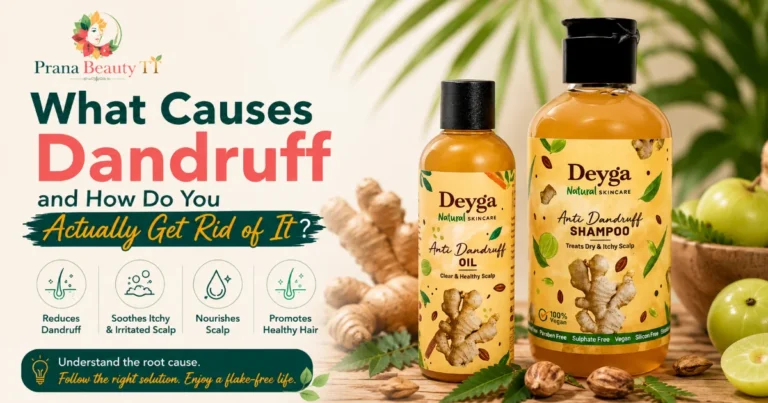
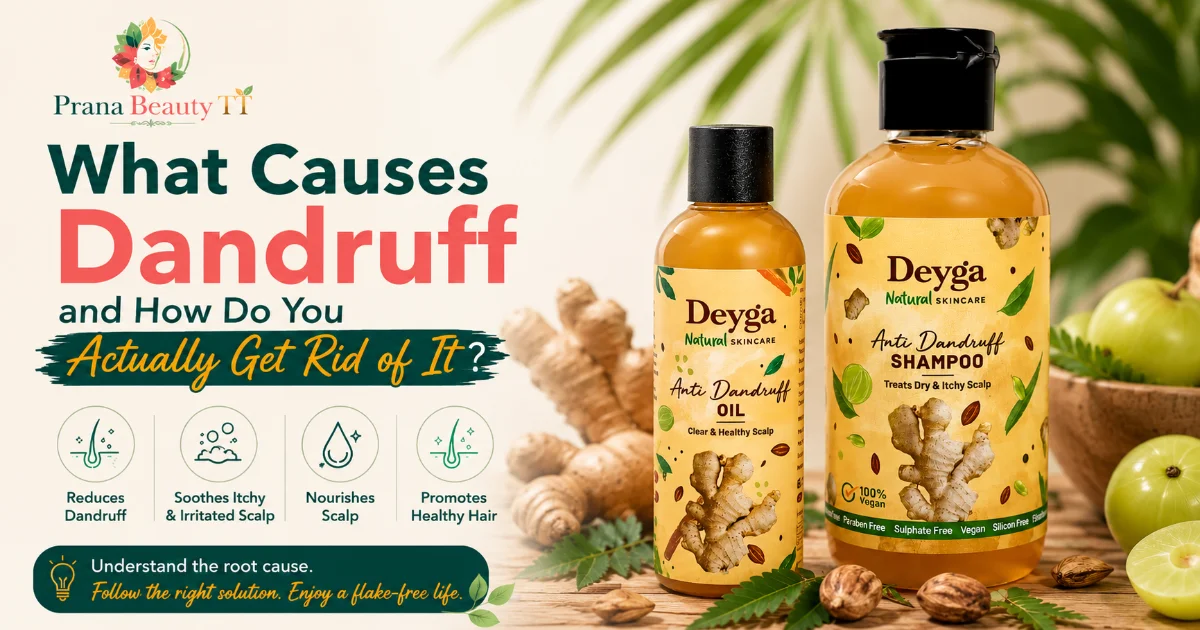
Prana Beauty TT’s Anti-Dandruff Oil contains neem seed, amla, castor oil, coconut oil, sunflower seed oil, and fenugreek.
Neem is one of the most researched natural antifungals for scalp conditions. A study published in Cureus found that neem application produced statistically significant reductions in dandruff severity, with 44% of participants showing no dandruff after treatment compared to just 2% in the control group. A 2024 study in Nature’s Scientific Reports found that a combined rosemary and neem extract outperformed ketoconazole, a conventional pharmaceutical antifungal, against Malassezia furfur.
Castor oil provides ricinoleic acid, an anti-inflammatory compound that helps soothe the itching and irritation dandruff causes. Amla contributes Vitamin C and antioxidants that support scalp repair.
How to use: Apply directly to the scalp, massage for 5-10 minutes, leave for 30-60 minutes, then wash out. Don’t leave oil on your scalp all day in tropical heat, as excess oil feeds the fungus you’re trying to control.
Step 2: Anti-Dandruff Shampoo
After the oil treatment, cleanse with a shampoo that delivers antifungal ingredients while removing build-up.
Prana Beauty TT’s Anti-Dandruff Shampoo combines ginger, coconut oil, and rosemary.
Ginger contains gingerols, compounds with documented antifungal and anti-inflammatory properties that help reduce fungal populations while calming scalp irritation. Rosemary has shown significant antifungal activity in research, including the 2024 study that found rosemary combined with neem was effective against both Malassezia furfur and Trichophyton rubrum.
How often: Twice a week during active treatment. On other wash days, use a gentle regular shampoo. Don’t use anti-dandruff shampoo every single wash to avoid over-treating the scalp.
When shampooing: Focus the lather on the scalp, not the hair length. Dandruff is a scalp condition. Let the suds run down the length as you rinse.
Step 3: Maintain
Malassezia lives on your scalp permanently. You can control its population, but you can’t eliminate it. If you stop treatment once flaking clears, the fungus regrows.
Weeks 1-4: Oil treatment plus anti-dandruff shampoo twice per week. Expect visible improvement within 2-3 weeks.
Week 5 onwards: Reduce to once a week. If dandruff returns, go back to twice weekly.
Ongoing: Wash after heavy sweating. Don’t let sweat sit on your scalp for hours. Use the anti-dandruff oil as a pre-wash treatment at the first sign of flaking.
Mistakes That Make Dandruff Worse
Using heavy oils as leave-in treatments. Coconut oil and olive oil are beneficial as pre-wash treatments, but leaving them on your scalp all day in tropical heat feeds Malassezia. Oil treatments should always be washed out.
Scratching. Scratching damages the scalp barrier, causes micro-wounds, and creates more inflammation, which worsens the dandruff. Persistent itching is a sign you need treatment, not scratching.
Switching products constantly. Anti-dandruff treatments need 3-4 weeks of consistent use. Switching every week doesn’t give any product enough time to work.
Over-washing with harsh shampoos. Stripping all oil triggers rebound overproduction, creating more fuel for the fungus and worsening the cycle.
When to See a Dermatologist
Most dandruff responds to consistent treatment within 3-4 weeks. See a dermatologist if you’ve treated consistently for 4-6 weeks with no improvement, if you notice severe redness or painful inflammation, if flaking appears on your eyebrows, nose, ears, or chest (which suggests seborrheic dermatitis), or if you’re experiencing significant hair loss alongside the dandruff.
Frequently Asked Questions
Is dandruff contagious?
No. Malassezia already lives on every human scalp. Dandruff happens when your individual scalp conditions allow the fungus to overgrow, not because you caught it from someone.
Does dandruff cause hair loss?
Not directly, but the inflammation it creates can weaken follicles over time. More commonly, excessive scratching damages the scalp and hair roots. Treating the dandruff and stopping the itch-scratch cycle usually stops the associated thinning.
Can natural ingredients work as well as medicated shampoos?
Some have genuine research support. Neem and rosemary in particular have demonstrated antifungal efficacy against Malassezia in clinical studies, with one 2024 study showing a rosemary-neem extract outperformed ketoconazole. However, concentration and formulation matter. A well-formulated product using these ingredients at effective levels will outperform a DIY paste.
The Bottom Line
Dandruff in Trinidad is primarily a fungal problem amplified by the climate. The solution requires consistency: targeted antifungal treatment with proven ingredients like neem, rosemary, and ginger, proper cleansing that balances oil removal without triggering rebound production, and an ongoing maintenance routine.
Start with the Anti-Dandruff Oil as a pre-wash treatment, follow with the Anti-Dandruff Shampoo twice a week, and stay consistent. The climate won’t change, but your scalp can.