
Choosing the right soap is not simply about picking the strongest cleanser or the bar with the most ingredients. Your skin type, your cleansing routine, and how your skin feels after bathing all matter. For people in Trinidad and Tobago, warm weather, humidity, sweating, and daily activity can also affect how the skin feels.
But that does not mean everyone needs the same type of soap. The better approach is to understand your skin first and then choose a bar that suits its needs.
Which Soap Is Best for Your Skin Type?
There is no single soap that is best for everyone. Your skin type is a useful starting point.
- Dry skin: Look for gentle cleansing and a more nourishing feel.
- Oily skin: Look for effective cleansing without repeatedly leaving the skin stripped.
- Combination skin: Choose a balanced cleansing approach.
- Sensitive skin: Keep the formula and routine simple and pay attention to irritation.
- Normal skin: A mild everyday cleansing bar may be enough.
A suitable cleanser should leave your skin clean and comfortable rather than consistently tight, burning, itchy, or unusually dry.
How Do You Know Your Skin Type?
Understanding your skin type can make choosing a soap much easier. Pay attention to how your skin behaves after cleansing and before applying other products.
Dry Skin
Dry skin may feel tight, rough, or uncomfortable after bathing. Some people also notice flaking, especially after long showers or frequent cleansing.
Oily Skin
Oily skin tends to become shiny or greasy more quickly. Some people may also notice clogged pores or body breakouts, particularly in areas affected by sweat and friction.
Combination Skin
Combination skin has different characteristics in different areas. Some areas may feel oily while others feel normal or dry.
Sensitive Skin
Sensitive skin may react more easily to certain products. Burning, stinging, itching, redness, or repeated discomfort after cleansing are useful signs to notice.
Normal Skin
Normal skin generally feels balanced and comfortable after washing. It does not need an especially strong cleanser simply because it does not have an obvious concern.
How to Choose Soap for Dry Skin?
If your skin feels tight or rough after bathing, focus on comfortable cleansing rather than trying to remove every trace of natural oil.
Look for a formula with ingredients commonly used in nourishing cleansing bars, such as plant oils and butters. More importantly, pay attention to your skin after rinsing. If it repeatedly feels stripped or uncomfortable, the soap or your cleansing routine may not be the right fit.
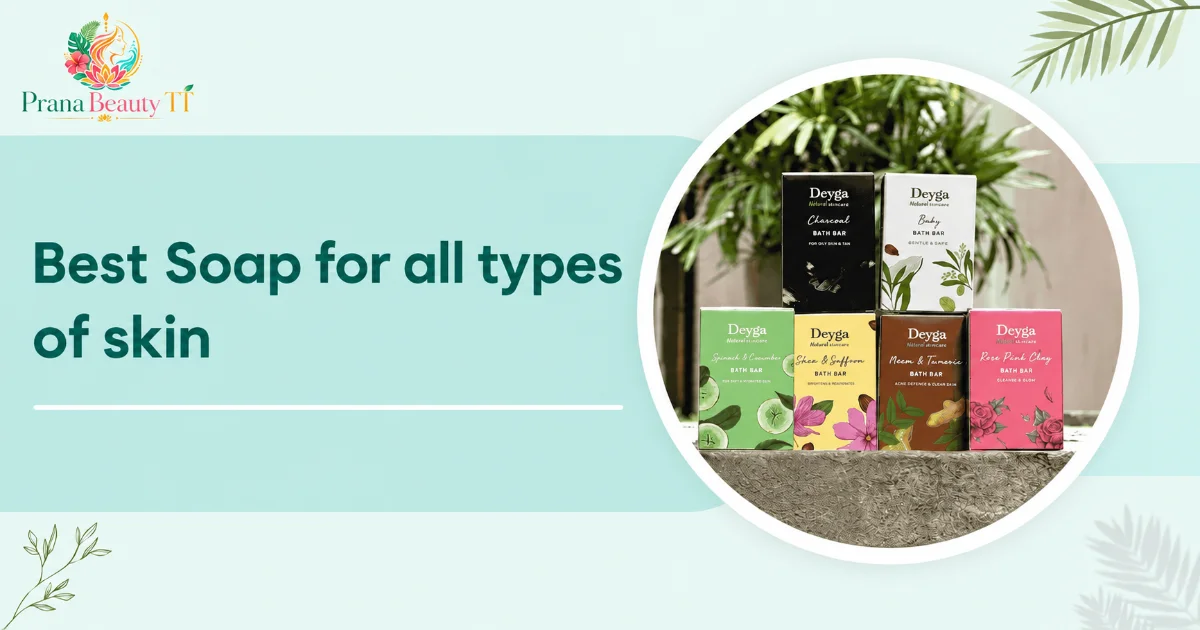
For a bar with shea butter and nourishing oils, the Shea Saffron Bath Bar is one option to consider. Prana Beauty lists olive oil, saffron, sunflower oil, castor oil, shea butter, and coconut oil among its ingredients.
Your bathing habits matter too. Very hot water, long showers, and repeated washing can make dry skin feel less comfortable.
How to Choose Soap for Oily Skin?
Oily skin still needs effective cleansing, but stronger does not automatically mean better.
The goal is to remove excess oil, sweat, and everyday build-up without repeatedly stripping the skin. If your skin feels oilier during hot or humid days, it can be tempting to wash more aggressively, but that is not always necessary.
For people looking for a more cleansing-focused option, the Charcoal Bath Bar contains olive oil, charcoal, tea tree oil, castor oil, shea butter, and coconut oil. Prana Beauty positions it around dirt, oil, impurities, and breakouts.
If oily skin is also a concern alongside clogged pores or breakouts, the Neem and Turmeric Bath Bar is another option. Its listed ingredients include neem, turmeric, sunflower oil, castor oil, shea butter, and olive oil.
The important point is to avoid turning oil control into excessive cleansing. Your skin should feel fresh and comfortable rather than aggressively stripped.
How to Choose Soap for Combination Skin?
Combination skin can be harder to manage because different areas may react differently to the same product.
If some areas feel oily while others become dry, avoid automatically choosing the strongest oil-control bar. A balanced approach may work better for everyday cleansing.
After bathing, consider:
- Does your whole body feel tight?
- Are only certain areas noticeably oily?
- Do some areas become dry while others feel greasy?
- Does the soap leave your skin comfortable afterwards?
These observations can tell you more about whether a product is working for you than a label alone.
How to Choose Soap for Sensitive Skin?
Sensitive skin usually benefits from keeping the routine straightforward.
Do not choose a soap simply because it has a strong fragrance, produces a lot of lather, or makes broad skincare claims. Consider how your skin feels during and after cleansing.
When introducing a new product, start carefully. If it repeatedly causes burning, itching, redness, or irritation, it may not be suitable for you.
For babies and very young children, an adult bar should not automatically be used simply because it is described as gentle. Prana Beauty’s Baby Bath Bar is an unscented 130g bar formulated with olive oil, aloe vera, almond, castor oil, shea butter, and coconut oil and specifically marketed for babies’ delicate skin.
For persistent or significant irritation, changing soaps is not a substitute for professional medical advice.
What Ingredients Should You Look for in a Soap?
The ingredient list can help you understand what a bar is designed around, but one ingredient alone does not determine whether a product will suit everyone.
Oils and Butters
Ingredients such as olive oil, coconut oil, castor oil, and shea butter are commonly used in cleansing bars and may contribute to a more nourishing-feeling formula.
Aloe Vera
Aloe vera is commonly included in skincare products intended to provide a soothing or comfortable skin feel.
Charcoal and Clay
Charcoal and clay are often used in cleansing products designed around excess oil and surface build-up.
Botanical Ingredients
Ingredients such as cucumber, neem, turmeric, rose, saffron, spinach, and other botanical ingredients are common in natural skincare formulations.
The more useful question is not “Which ingredient is best?” but “Does the complete formula suit my skin and leave it comfortable after cleansing?”
What Should You Be Careful About When Choosing Soap?
You do not need to reject a soap simply because one ingredient has a complicated name, or assume that a product is automatically better because it is labelled natural.
Instead, pay attention to how the product affects your skin.
Be cautious about routines that consistently involve:
- Very aggressive cleansing
- Excessive scrubbing
- Very hot water
- Repeated washing of the same area
- Choosing an extremely strong cleanser simply because your skin is oily
- Continuing to use a product that causes persistent irritation or discomfort
Your skin’s response is one of the most useful signals when deciding whether a cleansing product suits you.
Does Trinidad and Tobago’s Climate Affect Your Soap Choice?
It can influence how your skin feels, but it should not completely determine which soap you use.
Trinidad and Tobago has warm conditions throughout the year, and the wetter period can bring particularly hot and humid weather. You may therefore notice more sweating or a heavier feeling on the skin during some days.
If your skin becomes oilier after sweating or outdoor activity, you may prefer a more cleansing-focused routine. If your skin is dry or sensitive, the same weather does not automatically mean you should switch to a stronger soap.
Think of the climate as one factor in your routine—not a replacement for understanding your skin type.
Is Bar Soap Better Than Body Wash?
Not necessarily.
The fact that a cleanser comes in a bar does not automatically tell you whether it is gentle or harsh. Different cleansing products use different formulations, and factors such as cleansing agents and pH can affect how they interact with the skin.
That means the better question is not “bar or body wash?” but “Which formula cleans comfortably without repeatedly leaving my skin dry or irritated?”
If a bar works comfortably for your skin, there is no need to avoid it simply because it comes in solid form.
How Do You Know if Your Soap Is Too Harsh?
Your skin can give you useful feedback after bathing.
Pay attention if you repeatedly experience:
- Tightness immediately after washing
- Increasing dryness or flaking
- Burning or stinging
- Persistent itching or redness
- A consistently stripped or uncomfortable feeling
A strong “squeaky clean” sensation is not necessarily the goal. Effective cleansing should still leave your skin comfortable.
How Can You Build a Better Bathing Routine?
Your technique matters as much as the soap itself.
Use warm rather than very hot water, avoid aggressive scrubbing, and do not repeatedly wash the same area simply to make it feel exceptionally clean.
After bathing, dry your skin gently instead of rubbing it harshly. If your skin tends to become dry, applying a suitable moisturiser afterwards can help maintain comfort.
Also keep your soap somewhere it can dry between uses. Leaving a bar in standing water can soften it and make it wear away faster.
Another Option for Dry or Dull Skin
If your skin tends to feel dry, dull, or rough and you prefer a bar with clay and rose-based ingredients, the Rose Pink Clay Bath Bar is another Prana Beauty option. Its listed ingredients include olive oil, pink clay, rose petals, castor oil, shea butter, and coconut oil.
For a bar built around cucumber, spinach, and other botanical ingredients, the Spinach & Cucumber Bath Bar is also available. Its listed ingredients include olive oil, cucumber, spirulina, castor oil, shea butter, and matcha leaf.
You do not need to use several soaps at the same time. Start with the product that most closely matches your main concern and see how your skin responds.
Frequently Asked Questions
Can I use the same soap every day in Trinidad and Tobago?
Yes, as long as your skin remains comfortable and the soap does not consistently cause dryness or irritation. Your routine may need adjusting during periods of heavier sweating or changing skin needs.
Should I use a different soap when the weather is very humid?
Not necessarily. Humidity can make some people’s skin feel oilier or sweatier, but your skin type should still guide your choice. You do not need a stronger soap simply because the weather is hot.
Is a natural soap automatically better for Trinidad and Tobago’s climate?
No. “Natural” does not automatically mean gentler or more suitable. Look at the complete formulation and choose according to how your skin responds.
What should I do if my skin feels oily after using a soap?
Avoid immediately switching to a much harsher cleanser. Consider whether you are over-cleansing, and choose a formula that addresses excess oil without leaving your skin tight or uncomfortable.
Can I use a bath bar on my face?
Not automatically. Facial skin can have different cleansing needs from the body. Check whether the specific product is intended for facial use before applying a bath bar to your face.
Where should I store my soap in a humid climate?
Keep the bar somewhere it can drain and dry between uses rather than sitting in standing water. This helps prevent the bar from becoming unnecessarily soft and wearing away quickly.
How do I know when it is time to stop using a soap?
If you repeatedly experience burning, itching, redness, unusual dryness, or persistent discomfort after using it, stop and reassess the product rather than continuing to use it simply because it is marketed as gentle.
What is the simplest way to choose a soap?
Start with three things: your skin type, the main concern you want to address, and how your skin feels after bathing. That is usually more useful than choosing a soap based only on its fragrance, ingredients, or popularity.