
Omega-3 fatty acids are among the few nutrients with consistent scientific backing for both hair and skin health. They reduce inflammation, strengthen cell membranes, regulate oil production, and provide measurable UV protection from within. In a tropical climate where your skin and scalp face constant heat, sweat, and extreme UV exposure, these benefits carry more practical weight than in milder environments.
This guide covers what omega-3 does at the cellular level, where the evidence is strong versus preliminary, and how to get enough through diet and topical application.
How Omega-3 Benefits Hair?
EPA (eicosapentaenoic acid) and DHA (docosahexaenoic acid) are the two omega-3 forms most relevant to hair health. They support hair through four documented mechanisms.
Follicle nourishment and scalp circulation. EPA and DHA integrate into hair follicle cell membranes, improving their fluidity and function. They also help dilate blood vessels in the scalp, increasing blood flow and oxygen delivery to follicles. Better-nourished follicles produce stronger, thicker hair strands with improved keratin protein synthesis.
Growth cycle support. A 2015 randomised trial published in the Journal of Cosmetic Dermatology (Le Floc’h et al.) found that women with thinning hair who took a supplement containing omega-3 and omega-6 fatty acids plus antioxidants experienced significant improvement in hair density and reduced hair loss over six months. The results reflect the combined effect of these nutrients rather than omega-3 alone, but omega-3’s contribution through anti-inflammatory and membrane-strengthening pathways is well-supported by the broader evidence base.
Scalp inflammation reduction. Omega-3s reduce the production of pro-inflammatory prostaglandins and leukotrienes that damage follicles and contribute to seborrheic dermatitis, folliculitis, and inflammation-driven thinning. In Trinidad’s climate, where heat and sweat keep scalp inflammation elevated year-round, this anti-inflammatory effect has direct practical value.
Sebum regulation. The oil glands attached to every hair follicle require EPA and DHA to produce balanced, healthy sebum. When omega-3 intake is adequate, sebum production tends to normalise. Deficiency can result in either an excessively dry or an overactive oily scalp, both of which compromise hair health and contribute to dandruff.
How Omega-3 Benefits Skin?
Skin barrier integrity. DHA and EPA are structural components of the phospholipid bilayer that forms every skin cell membrane. Adequate omega-3 keeps this barrier flexible, strong, and less permeable to irritants. A review published in Marine Drugs confirmed this structural role for both cosmetic and therapeutic skin applications. A compromised barrier leads to increased transepidermal water loss (TEWL), dryness, and heightened sensitivity.
UV photoprotection. Research demonstrates that omega-3 supplementation increases the skin’s resistance to UV-induced damage, reducing sunburn severity and the inflammatory response after exposure. This is called intrinsic photoprotection. It doesn’t replace sunscreen, but at a UV index of 12-15 (Trinidad’s year-round reality), some radiation penetrates even with proper sun protection. Omega-3 provides a secondary cellular defence.
Inflammatory skin conditions. Omega-3s modulate inflammatory pathways relevant to acne, eczema, and psoriasis. Several studies have reported decreases in acne lesion count with omega-3 supplementation. For eczema and psoriasis, omega-3s help reduce the redness, itching, and flaking associated with these conditions by lowering the production of inflammatory cytokines. In Trinidad’s humidity, where sweat can aggravate inflammatory skin conditions, this anti-inflammatory action provides consistent relief.
Wound healing. Omega-3 fatty acids support tissue repair by promoting healthy cell membrane formation in newly generated skin cells and reducing the excessive inflammation that can slow healing. Minor cuts, sunburn recovery, and post-breakout skin repair all benefit from adequate omega-3 levels.
Signs You’re Not Getting Enough Omega-3
Omega-3 deficiency doesn’t always present as a single dramatic symptom. It shows up as a pattern across hair, skin, and nails:
Persistently dry, flaky scalp despite adequate washing and conditioning. Dull, brittle hair that breaks easily and lacks natural shine. Dry, rough, or scaly skin, particularly on the arms and legs. Slow wound healing or prolonged redness after minor skin irritation. Brittle, peeling nails. Increased sensitivity to sun exposure.
If several of these apply, inadequate omega-3 intake is worth investigating before adding more topical products to your routine. The issue may be nutritional, not cosmetic.
The Omega-6 to Omega-3 Ratio Problem
Your body needs both omega-6 and omega-3 fatty acids, but the ratio matters significantly. Omega-6 fatty acids (found in vegetable oils, processed foods, and fried foods) promote inflammation when consumed in excess relative to omega-3. The ideal ratio is roughly 2:1 to 4:1 (omega-6 to omega-3). Most modern diets, including typical Caribbean diets that rely on fried foods and vegetable oil-based cooking, push this ratio to 15:1 or higher.
At these elevated ratios, the pro-inflammatory effects of omega-6 overwhelm omega-3’s anti-inflammatory capacity. The result is chronic low-grade inflammation throughout the body, including the scalp and skin. Increasing omega-3 intake while reducing excessive omega-6 consumption (cutting back on deep-fried foods, processed snacks, and cheap cooking oils) produces better results than supplementing omega-3 alone.
Topical vs Dietary Omega-3: Different Pathways
Dietary omega-3 (from food or fish oil supplements) reaches follicles and skin cells through the bloodstream, supporting systemic inflammation reduction and cell membrane health from within.
Topical omega-3 (from oils applied to hair and skin) delivers fatty acids directly to the surface. It provides immediate barrier protection, conditioning, and localised anti-inflammatory effects but can’t reach the deepest follicle structures as efficiently as blood-delivered omega-3.
They complement each other rather than duplicating the same benefit.
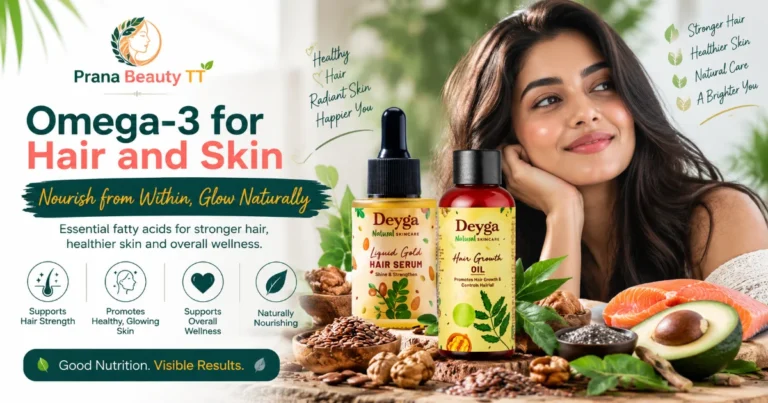
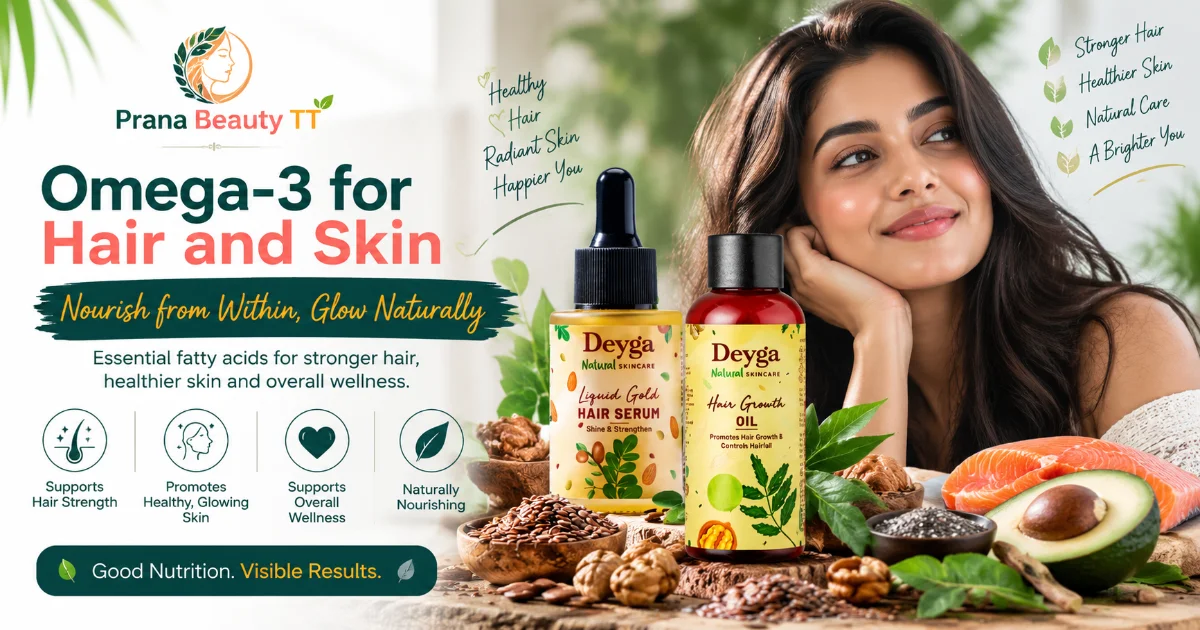
For hair: Prana Beauty TT’s Hair Serum (Liquid Gold) delivers omega-3 rich plant oils directly to the hair shaft. Applied to damp hair after washing, it seals the cuticle, adds shine, reduces frizz, and provides a protective layer against humidity and environmental oxidative stress.
For scalp: The weekly pre-wash treatment with Hair Growth Oil delivers anti-inflammatory compounds directly to the follicle environment through scalp massage, complementing dietary omega-3’s systemic benefits.
How to Get Enough Omega-3?
Dietary Sources
The richest sources of EPA and DHA are fatty fish: salmon, mackerel, sardines, and herring. In Trinidad, locally available fish like kingfish, carite, and flying fish provide meaningful omega-3 content. Two to three servings of fatty fish per week typically meets the recommended intake.
Plant-based sources provide ALA (alpha-linolenic acid), which the body converts to EPA and DHA at a low rate, typically 5-10% for EPA and as low as 2-5% for DHA. ALA sources include flaxseeds, chia seeds, walnuts, and hemp seeds. If you rely primarily on plant sources, an algae-based omega-3 supplement is the most effective way to get adequate EPA and DHA without fish.
Target intake: At least 1,000mg combined EPA and DHA daily. Research showing hair and skin benefits has used doses between 1,000mg and 2,000mg. A standard fish oil capsule typically contains 300-500mg combined EPA and DHA, meaning 2-3 capsules daily for most supplements.
Topical Application
Apply Hair Serum (Liquid Gold) to damp hair after every wash, 2-3 drops from mid-length to ends. This seals the cuticle before humidity can penetrate, delivers omega-3 rich oils to the hair surface, and creates a barrier against frizz and environmental damage.
Frequently Asked Questions
How long before omega-3 improves hair or skin?
Skin improvements like better hydration and reduced redness can appear within 4-8 weeks of consistent dietary intake. Hair improvements require 3-6 months because new hair must grow out with improved follicle nutrition. Topical application shows surface-level results (shine, smoothness) from the first use.
Can omega-3 help with dandruff?
Yes. Dandruff is driven partly by scalp inflammation and sebum imbalance, both of which omega-3 helps regulate. It’s not a standalone dandruff treatment, but adequate omega-3 intake supports the scalp environment needed for other anti-dandruff products to work effectively.
Is fish oil or algae oil better for hair and skin?
Both provide EPA and DHA with similar biological effects. Fish oil is more widely available and often cheaper. Algae oil is the preferred option for vegetarians and vegans, and it avoids potential mercury contamination found in some lower-quality fish oils. Choose based on dietary preferences, not effectiveness.
The Bottom Line
Omega-3 fatty acids support hair and skin through inflammation reduction, cell membrane strengthening, sebum regulation, and UV photoprotection. The evidence is strongest for improving hair density and strand quality, skin barrier integrity, and inflammatory skin condition management.
In Trinidad, where UV exposure, heat-driven inflammation, and rapid shifts between outdoor humidity and indoor air conditioning stress the skin and scalp year-round, omega-3 addresses multiple challenges at once. Combine dietary intake (fatty fish 2-3 times weekly or at least 1,000mg EPA+DHA supplementation) with topical application through Hair Serum (Liquid Gold) for comprehensive coverage from both inside and out.