
Rice water has been used in hair care across East Asia for centuries. The Yao women of Huangluo, China, are often cited for maintaining floor-length hair well into old age, crediting fermented rice water as a key part of their routine. Social media turned this tradition into a global trend, but most content either overhypes it as a growth miracle or dismisses it as folklore.
The science sits between those extremes. Rice water contains compounds with proven hair benefits, and when formulated into a sulphate-free shampoo, it addresses several problems specific to washing hair frequently in tropical humidity.
What Rice Water Actually Does to Hair?
The key compound in rice water is inositol, a naturally occurring carbohydrate with a unique property: it penetrates damaged hair shafts and remains active even after rinsing. No other common hair care ingredient does this.
A 2010 cosmetic science study found that inositol reduces hair surface friction by up to 40% and improves elasticity. These aren’t cosmetic marketing claims. Reduced friction means less tangling and less breakage during combing and styling. Improved elasticity means hair can stretch under tension without snapping, which matters for textured and curly hair types that experience more mechanical stress.
Rice water also contains amino acids that support the keratin protein matrix in hair strands, B vitamins that contribute to scalp health, and antioxidants that help protect against environmental oxidative stress.
Fermented rice water takes this further. The fermentation process increases inositol concentration, lowers the pH to a mildly acidic range (closer to hair’s natural pH of 4.5-5.5), and produces additional beneficial compounds. The lower pH helps flatten the hair cuticle after washing, which directly reduces frizz and increases shine.
Does Rice Water Grow Hair?
No. There is no clinical evidence that rice water stimulates hair follicles, increases hair count, or reverses thinning.
What it does is protect existing hair from damage, reduce breakage, and improve strand integrity. Hair that breaks less retains more length over time, which can create the appearance of faster growth. But this is retention, not stimulation.
If you’re experiencing genuine hair thinning or loss, rice water shampoo won’t solve it. That requires identifying the underlying cause, whether hormonal, nutritional, or related to scalp conditions.
Why Sulphate-Free Matters More in Trinidad?
Most conventional shampoos use sulphates (sodium lauryl sulphate or sodium laureth sulphate) as their primary cleansing agent. Sulphates are effective degreasers, but they work by stripping oil aggressively from the hair and scalp.
In a cooler, drier climate where you wash your hair twice a week, this stripping effect is manageable. In Trinidad, where heat and humidity mean many people wash 3-4 times a week, sulphate-based shampoos create a damaging cycle: each wash strips natural oils, the scalp overproduces sebum to compensate, hair feels greasy within hours, you wash again, and the cycle repeats.
Sulphate-free shampoos use gentler surfactants that cleanse sweat, oil, and build-up without triggering this rebound. Within 2-3 weeks of switching, most people find their scalp produces less excess oil because it’s no longer compensating for aggressive stripping.
For anyone washing frequently in tropical conditions, sulphate-free is not a luxury preference. It’s a practical necessity for maintaining scalp balance.
How Prana Beauty TT’s Rice Water Shampoo Works?
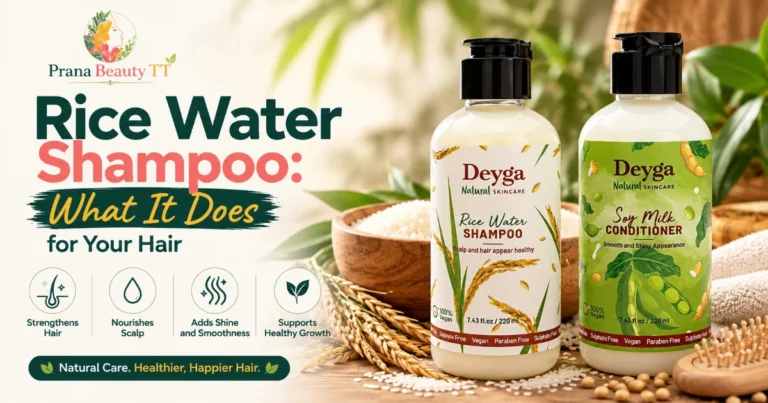
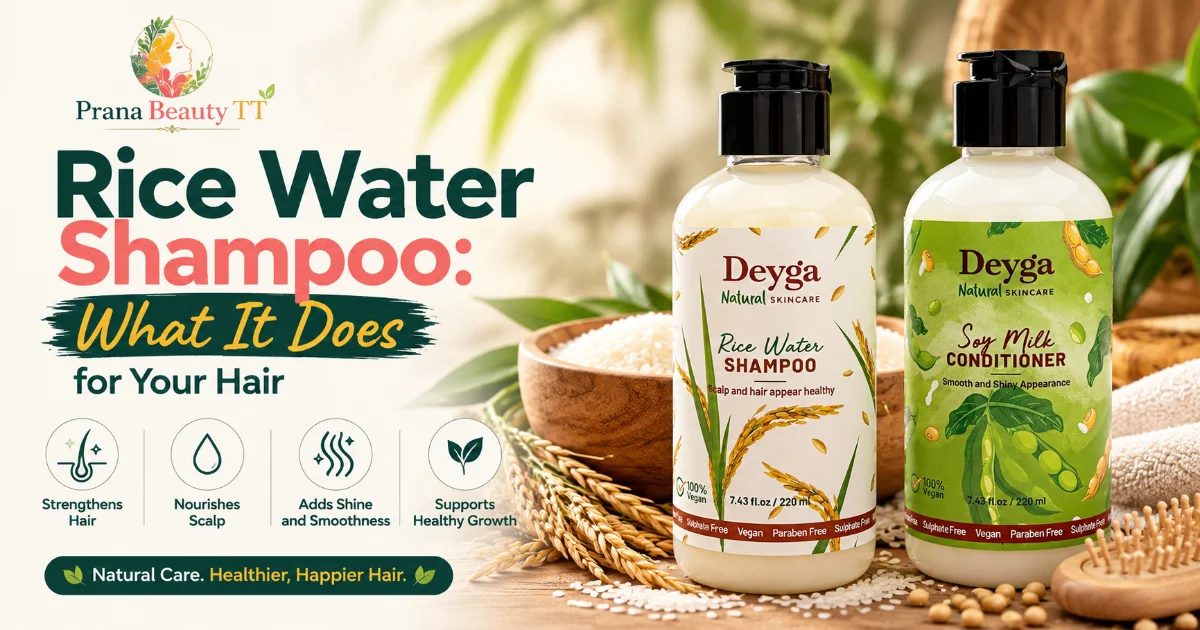
Prana Beauty TT’s Rice Water Shampoo combines fermented rice water with a sulphate-free cleansing base. This delivers inositol’s strand-strengthening and friction-reducing benefits while cleansing gently enough for frequent use in Trinidad’s climate.
The fermented rice water base provides the lower pH that helps seal the cuticle after washing. In humid conditions, a sealed cuticle is your primary defence against frizz. When the cuticle is open (as it is after washing with high-pH sulphate shampoos), moisture from the air penetrates the strand, causes it to swell, and produces the puffiness and frizz that make humid-climate hair difficult to manage.
How to use it for best results:
Wet hair thoroughly. Apply the shampoo to the scalp, not the lengths. Massage for 1-2 minutes to lift oil, sweat, and build-up from the scalp surface. Let the lather run through the lengths as you rinse. Follow with Soy Milk Conditioner from mid-length to ends to close the cuticle further and add moisture.
On wash days where you’ve done a pre-wash oil treatment with Hair Growth Oil, you may need to lather twice to fully remove the oil. The first lather breaks down the oil, the second cleanses the scalp.
Who Benefits Most from Rice Water Shampoo?
Textured, curly, or coily hair. These hair types have a naturally raised cuticle that loses moisture faster and experiences more friction during styling. Inositol’s ability to reduce surface friction and persist inside the strand after rinsing makes rice water particularly effective for reducing breakage in textured hair.
Hair that’s washed frequently. If you’re washing 3+ times a week due to heat, sweat, or exercise, a sulphate-free rice water shampoo gives you effective cleansing without the cumulative damage of repeated sulphate exposure.
Heat-damaged or chemically treated hair. Inositol penetrates damaged areas of the hair shaft more readily than healthy areas, meaning it delivers the most benefit where hair needs it most. If you regularly use heat tools, colour your hair, or have had chemical treatments, rice water can help repair surface-level damage and reduce ongoing breakage.
Anyone dealing with frizz in humidity. The combination of lower-pH fermented rice water and sulphate-free cleansing keeps the cuticle flatter after washing, which directly reduces how much ambient moisture can penetrate and swell the strand.
Frequently Asked Questions
Can I make rice water at home instead of using a shampoo?
You can, but homemade rice water and a formulated shampoo serve different functions. DIY rice water is a rinse, not a cleanser. It delivers inositol but doesn’t clean your scalp. You’d still need a shampoo for cleansing, then use the rice water as a separate treatment step. A rice water shampoo combines both functions. There’s also a consistency issue: homemade fermentation is difficult to control, and over-fermented rice water becomes too acidic and can irritate the scalp.
How long before I see results?
Most people notice smoother texture and less tangling within 2-3 washes. Reduced breakage becomes measurable over 4-6 weeks of consistent use. If you’re switching from a sulphate-based shampoo, expect a 2-3 week transition period where your scalp adjusts its oil production downward.
Can rice water shampoo replace my conditioner?
No. Rice water shampoo delivers protein-based strengthening (inositol, amino acids), but it doesn’t replace the moisture and detangling function of a conditioner. Protein and moisture work as a balance. Too much protein without moisture can make hair feel stiff and brittle. Always follow with a conditioner, especially in humid conditions where cuticle-sealing is essential for frizz control.
The Bottom Line
Rice water’s benefits are real but specific: inositol strengthens hair from within, reduces friction, improves elasticity, and persists after rinsing. Combined with sulphate-free cleansing in a shampoo format, it addresses the exact challenges of washing hair frequently in Trinidad’s heat and humidity.
It won’t grow new hair. It will protect the hair you have, reduce breakage, and keep your scalp balanced through repeated washing in tropical conditions. For most people dealing with frizz, breakage, and the oiliness cycle that comes from over-washing with harsh shampoos, switching to a Rice Water Shampoo is one of the most practical changes you can make.