
Vitamin C is one of the most talked-about skincare ingredients in the world. It’s also one of the most misunderstood, especially if you live in a tropical climate where the rules of skincare work a little differently.
In Trinidad and Tobago, your skin faces a specific combination of challenges that makes Vitamin C more relevant than it is for someone living in London or Toronto. Year-round UV exposure, high humidity, and the kind of heat that keeps your skin producing oil and sweat from morning to night, these aren’t minor details. They change how your skin ages, how dark spots form, and which skincare ingredients actually help.
This guide explains what Vitamin C does at a skin level, why it matters more in the Caribbean than most articles acknowledge, and how to use it properly without wasting your money or irritating your skin.
Why Vitamin C Matters More in Trinidad and Tobago?
Most Vitamin C skincare articles are written for people in temperate climates, places where UV exposure fluctuates with the seasons. Trinidad and Tobago sits close to the equator, which means UV conditions here are fundamentally different.
According to UV index data for Trinidad, the UV index regularly reaches 12 to 15 between March and September — classified as “extreme” on the international scale. Even during the cooler months from October to February, the index rarely drops below 10 to 12. For context, a UV index above 11 means unprotected skin can burn in under 10 minutes.
That’s not seasonal sun. That’s year-round, daily UV bombardment, and it affects your skin whether you burn visibly or not.
For people with melanin-rich skin, which includes a large proportion of Trinidad and Tobago’s population, UV damage often shows up not as sunburn but as hyperpigmentation: dark spots, uneven skin tone, and patches of discolouration that deepen over time. Serpentine Dermatology, a Trinidad-based practice, has pointed out that Caribbean skin requires consistent protection regardless of skin tone, because living this close to the equator means cumulative UV damage is happening whether you see it on the surface or not.
This is where Vitamin C becomes genuinely useful, not as a trend, but as a functional ingredient that addresses the specific damage your skin accumulates in this climate.
What Vitamin C Does at the Skin Level?
Vitamin C (ascorbic acid) is an antioxidant. That word gets thrown around loosely in skincare marketing, so here’s what it actually means for your skin:
It Neutralises Free Radicals from UV Exposure
When UV radiation hits your skin, it generates unstable molecules called free radicals. These molecules damage cell structures, break down collagen, and accelerate the visible signs of ageing — fine lines, loss of firmness, and textural changes. Antioxidants like Vitamin C donate electrons to stabilise these free radicals before they can cause that damage.
Sunscreen blocks UV rays from reaching your skin. Vitamin C deals with the damage from the UV that gets through anyway. They work on different parts of the same problem, which is why dermatologists recommend using both together rather than choosing one over the other.
It Inhibits Excess Melanin Production
When your skin is exposed to UV radiation, it produces melanin as a defence mechanism. In tropical climates, this process runs almost constantly. Over time, melanin can accumulate unevenly, leading to dark spots, post-inflammatory hyperpigmentation (the marks left after acne or inflammation), and an overall uneven skin tone.
Vitamin C interrupts an enzyme called tyrosinase, which is a key driver of melanin production. With consistent use, this can gradually fade existing dark spots and reduce the formation of new ones — without bleaching or stripping the skin’s natural colour. It’s an evening-out process, not a lightening one.
It Supports Collagen Production
Collagen is the protein that keeps skin firm and resilient. UV exposure breaks collagen down faster than your body can rebuild it, and in a climate where UV exposure is extreme year-round, this process accelerates significantly. Vitamin C is a co-factor in collagen synthesis, meaning your body literally needs it to produce collagen effectively.
Topical Vitamin C supports this process directly at the skin level, helping to maintain firmness and reduce the appearance of fine lines over time.
It Brightens Dull Skin
If your skin looks flat or tired despite being well-hydrated, Vitamin C can help. By reducing oxidative stress and evening out melanin distribution, it restores a natural luminosity that humidity, sweat, and sun exposure can gradually strip away.
The Stability Problem — And Why It Matters in Tropical Humidity
Here’s where most Vitamin C articles fail people in the Caribbean: they don’t mention that the most common form of Vitamin C — L-ascorbic acid — is notoriously unstable in heat and humidity.
L-ascorbic acid oxidises rapidly when exposed to air, light, and moisture. In Trinidad’s climate, where humidity regularly exceeds 80%, an unstable Vitamin C formula can lose its potency within weeks of opening. When Vitamin C oxidises, it turns yellow or brown — and an oxidised serum can actually increase free radical activity on your skin instead of reducing it.
This doesn’t mean you should avoid Vitamin C. It means you need to pay attention to which form of Vitamin C is in the product.
L-ascorbic acid is the most studied and potent form, but it requires careful formulation (low pH, airtight packaging) and proper storage to remain effective in humid conditions.
Ascorbyl glucoside is a stabilised derivative where a glucose molecule is bonded to the ascorbic acid. This bond protects it from oxidation during storage. Once applied to the skin, enzymes break the bond and release active Vitamin C gradually. It’s more stable in heat and humidity, gentler on sensitive skin, and still delivers antioxidant and brightening benefits — though the conversion to active Vitamin C is slower and may be less potent than direct L-ascorbic acid at the same concentration.
For people living in Trinidad and Tobago, a stabilised Vitamin C derivative can be a practical advantage. You get consistent activity over the product’s shelf life without the risk of your serum degrading in the bathroom heat between uses.
How to Use Vitamin C in Your Skincare Routine?
Vitamin C works best as part of a morning routine, because that’s when your skin faces its highest UV and environmental exposure. The basic sequence:
Step 1: Cleanse. Remove overnight oil and sweat so Vitamin C can absorb properly. In Trinidad’s humidity, a foaming cleanser works well because it cuts through excess sebum without requiring heavy rinsing.
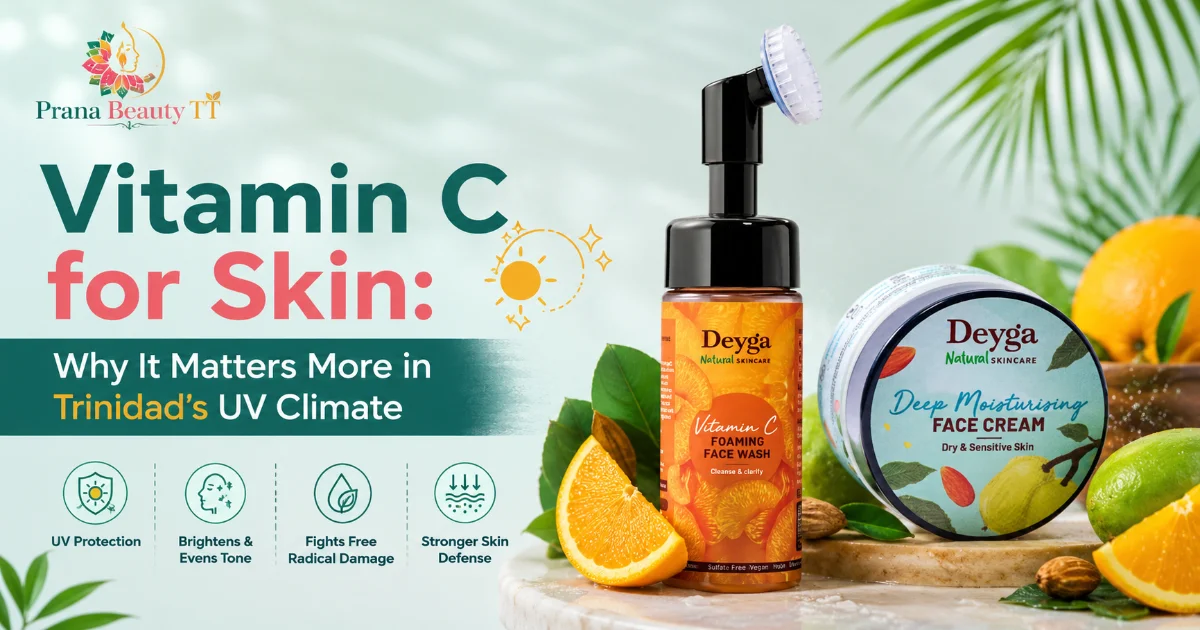
Prana Beauty TT’s Vitamin C Foaming Facewash uses ascorbyl glucoside, a stable Vitamin C derivative, alongside citrus extracts and glycerin. The built-in silicone brush provides gentle physical exfoliation while you cleanse, helping to remove the dead cell build-up that humid conditions accelerate. This means you’re already delivering Vitamin C to your skin at the cleansing stage, not just washing and moving on.
The facewash is designed to control oil for up to 8 hours, which matters when you’re dealing with T&T’s heat and need your cleanser to do more than rinse.
Step 2: Apply Vitamin C serum. After cleansing, while skin is still slightly damp, apply a Vitamin C serum. Damp skin absorbs water-soluble actives more efficiently.
Prana Beauty TT’s 10% Vitamin C Face Serum delivers a concentrated dose of Vitamin C directly to the skin. At 10%, it’s strong enough to produce visible results but moderate enough to minimise irritation — a sensible starting point for most skin types, including sensitive skin. Apply 2-3 drops and pat gently into the skin. Let it absorb fully before the next step.
Step 3: Moisturise. Seal in the serum with a moisturiser suited to your skin type. In humid conditions, a lighter formula usually works better during the day to avoid a heavy or sticky feel.
Step 4: Sunscreen. This is non-negotiable, especially when using Vitamin C. Sunscreen creates the physical UV barrier. Vitamin C handles the oxidative damage that sunscreen alone can’t fully prevent. Together, they provide significantly better protection than either one used alone.
What Results to Expect And When?
Vitamin C is not an overnight ingredient. Here’s a realistic timeline:
Week 1-2: Skin may feel smoother and look slightly more radiant. You’re seeing the antioxidant and hydration effects. No significant change in dark spots yet.
Week 4-6: With consistent daily use, dark spots may begin to fade gradually. Skin tone should look more even. This is when the tyrosinase inhibition starts producing visible results.
Week 8-12: More noticeable improvement in hyperpigmentation, texture, and overall brightness. Collagen-related benefits (firmness, fine line reduction) take longer and become more apparent with extended use.
The key word is consistent. Using Vitamin C twice a week won’t produce meaningful results. Daily use, ideally every morning, is what moves the needle.
Vitamin C for Different Skin Types in a Tropical Climate
Oily Skin
Oily skin in Trinidad’s humidity is already producing excess sebum and dealing with clogged pores. Vitamin C won’t make oiliness worse, in fact, its antioxidant properties can help regulate some of the inflammatory processes that drive excess oil production.
Use a lightweight serum (not a cream-based Vitamin C product) and pair it with an oil-controlling cleanser. The Vitamin C Foaming Facewash is specifically formulated for oily and combination skin, with surfactants derived from coconut and corn that cleanse without stripping.
Dry Skin
Vitamin C can complement a hydrating routine without replacing it. If you have dry skin, apply the Vitamin C serum first, then layer a richer moisturiser on top. The serum provides the active treatment; the moisturiser locks in moisture. Prana Beauty TT’s Deep Moisturising Face Cream with marula oil and shea butter pairs well with Vitamin C serum for dry skin types.
Sensitive Skin
If your skin reacts easily, start with a lower concentration or a stabilised derivative like ascorbyl glucoside rather than pure L-ascorbic acid. Use the serum every other day for the first two weeks, then move to daily use once your skin adjusts. If you experience persistent redness or stinging, reduce frequency or consult a dermatologist.
Acne-Prone Skin
Vitamin C’s anti-inflammatory properties can help with the redness and post-acne marks that breakouts leave behind. It doesn’t treat active acne directly, but it accelerates the fading of hyperpigmentation once a breakout heals. Pair it with a Tea Tree Facial Toner for acne control, then apply Vitamin C serum to address the marks.
Common Mistakes to Avoid
Storing Vitamin C in the bathroom. Heat, steam, and light degrade Vitamin C serums faster. In Trinidad’s climate, store your serum in a cool, dark place — a bedroom drawer or even the refrigerator.
Skipping sunscreen. Vitamin C makes your skin more effective at handling UV damage, but it does not replace sunscreen. Without SPF, you’re fighting free radicals while letting UV radiation create new ones at full speed.
Using an oxidised product. If your Vitamin C serum has turned dark yellow, orange, or brown, it has oxidised and should be replaced. Using oxidised Vitamin C can cause irritation and potentially increase free radical damage — the opposite of what you want.
Mixing with the wrong actives. Avoid using Vitamin C at the same time as benzoyl peroxide (which can oxidise it) or retinol at high concentrations (which can cause excessive irritation when layered). If you use retinol, apply it at night and keep Vitamin C for the morning.
Expecting instant results. Dark spots that took months to form won’t vanish in a week. Commit to at least 8-12 weeks of daily use before evaluating whether a Vitamin C product is working for you.
Vitamin C Serum vs Vitamin C Face Wash: Do You Need Both?
They serve different purposes and work at different intensities.
A Vitamin C serum is a leave-on treatment. It sits on your skin for hours, giving the active ingredient time to absorb deeply and work continuously. This is where you get the strongest brightening, anti-ageing, and hyperpigmentation benefits.
A Vitamin C face wash is a rinse-off product. The active ingredient contacts your skin for a shorter period during cleansing. It won’t deliver the same concentration of Vitamin C as a serum, but it provides consistent daily exposure with minimal effort — and if the formula includes a stable derivative like ascorbyl glucoside, some of that Vitamin C absorbs during the wash even before you rinse.
For maximum results, using both creates a two-layer approach: the facewash delivers Vitamin C during cleansing and prepares the skin, while the serum provides sustained, concentrated treatment throughout the day.
If you’re choosing only one, the serum delivers more concentrated results. If you want an easy entry point with lower commitment, the facewash is a practical starting point that adds Vitamin C to a step you’re already doing.
Frequently Asked Questions
Can I use Vitamin C every day?
Yes. Daily use is recommended for best results. Most skin types tolerate Vitamin C well, especially stabilised forms like ascorbyl glucoside. If you have very sensitive skin, start with every other day and increase frequency as your skin adjusts.
Is Vitamin C safe for darker skin tones?
Yes. Vitamin C is not a bleaching agent. It works by evening out excess melanin production, which means it fades dark spots and discolouration without altering your natural skin colour. It’s particularly beneficial for melanin-rich skin that’s prone to hyperpigmentation from UV exposure — which describes a large part of Trinidad and Tobago’s population.
Does Vitamin C make skin more sensitive to the sun?
No. This is a common misconception. Vitamin C actually helps protect against UV damage by neutralising free radicals. However, you should always use sunscreen alongside Vitamin C for complete protection — not because Vitamin C increases sensitivity, but because sunscreen and Vitamin C together provide better defence than either alone.
How do I know if my Vitamin C serum has gone bad?
Check the colour. A fresh Vitamin C serum should be clear or very pale. If it has turned yellow, orange, or brown, it has oxidised and should be replaced. Also watch for changes in smell or texture.
Can I use Vitamin C with hyaluronic acid?
Yes — they complement each other well. Vitamin C provides antioxidant protection and brightening, while hyaluronic acid delivers hydration. Apply Vitamin C serum first, let it absorb, then follow with 2% Hyaluronic Serum to lock in moisture. This combination is especially effective in humid climates where skin needs both protection and hydration.
Should I use Vitamin C in the morning or at night?
Morning is ideal. Vitamin C’s primary role is antioxidant protection against UV and environmental damage — both of which peak during daylight hours. Applying it in the morning, before sunscreen, means it’s actively protecting your skin when you need it most.