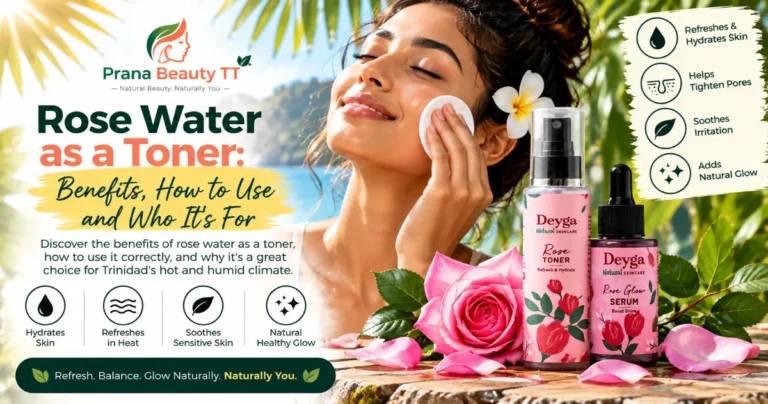

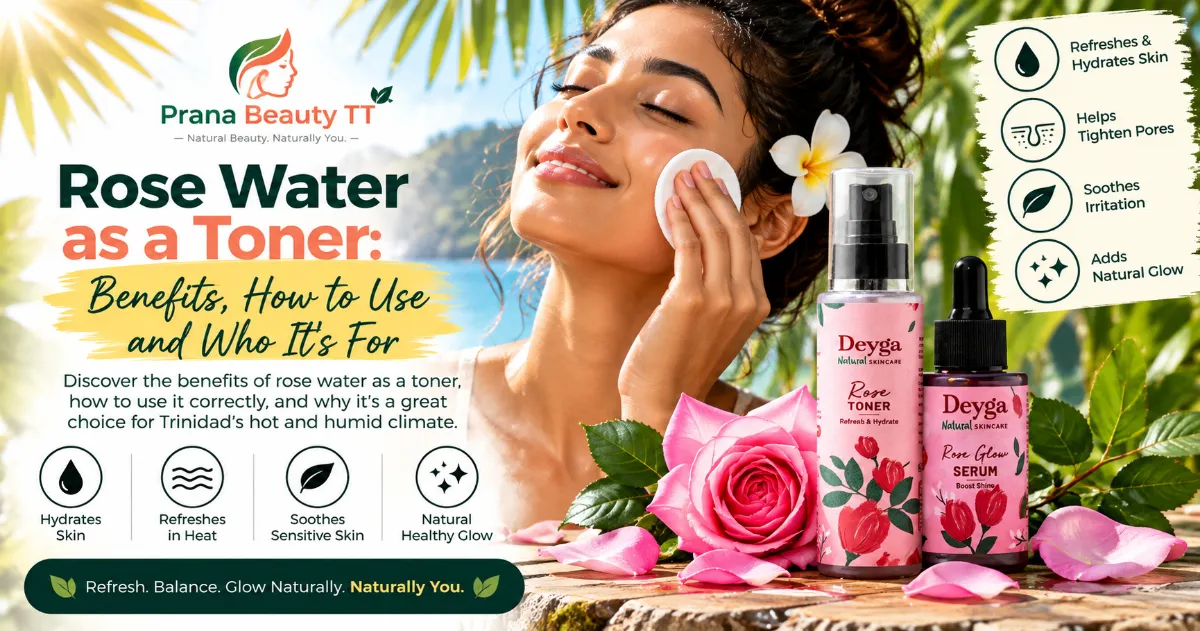
Quick answer: Rose water can work as a gentle toner. It’s mainly water distilled with rose petals, so it refreshes and lightly hydrates skin after cleansing, and some dermatologists say it may help soothe mild redness. Research on its benefits is limited, so treat it as a pleasant, optional step rather than a treatment. Choose one without added alcohol, fragrance or dyes, patch test it first and follow it with a moisturiser. In Trinidad’s heat, a chilled rose water spritz is an easy way to refresh your face during the day.
Rose water has been used in skin care for centuries across the Middle East, India and Europe, and many families in Trinidad and Tobago still keep a bottle on the dressing table. Today it’s sold as a toner, face mist and makeup setting spray.
But does it actually do anything for your skin? Here’s what dermatologists and the research say, and how to get the most from it.
What Is Rose Water?
Rose water is made by steam-distilling rose petals, traditionally the Damask rose (Rosa damascena), in water. The result is mostly water with small amounts of fragrant compounds from the petals.
That last point matters. A 2021 review covered by National Geographic found that rose water typically contains only a small amount of rose oil, so its effects are mild.
What Is a Toner, and Do You Need One?
A toner is a watery liquid you apply after cleansing. Older toners were designed to remove leftover cleanser and oil, often using alcohol, which can dry and irritate skin. Most modern toners are gentler and focus on hydration.
Dermatologist Dr. Karan Lal told HuffPost: “You don’t need rose water in your skin care regimen.” In other words, a toner is optional. A gentle cleanser, moisturiser and sunscreen are the essentials. If you enjoy a toner step, rose water is one of the gentlest choices.
What Rose Water Can Do for Your Skin
| Possible benefit | What the evidence and experts say |
| Refresh and lightly hydrate | It’s mostly water, so it adds a quick layer of moisture. Seal it in with moisturiser. |
| Soothe mild redness | Dermatologists say it may soothe irritation; Healthline cites a small study on rosacea-related redness. Evidence is limited. |
| Antioxidant support | Rose petals contain antioxidant compounds such as polyphenols and flavonoids, but Dr. Hadley King says “studies of rose water skin benefits have been quite limited.” |
| Mild oil control | Dr. Marisa Garshick describes it as a mild astringent that may help reduce oiliness. |
| Antibacterial activity | Lab studies show activity against some microbes; this hasn’t been proven in skin trials. |
As dermatologist Dr. Melanie Palm put it: “Rose water isn’t a miracle skin care ingredient, and it certainly won’t cancel out bad skin care habits.”
What Rose Water Won’t Do?
- Fade dark spots or lighten skin. For uneven tone, look at targeted ingredients like vitamin C and daily sunscreen.
- Shrink pores permanently. It can make skin feel tighter for a short time, but pore size doesn’t change.
- Replace moisturiser. Rose water evaporates. Without a cream on top, your skin can end up drier.
- Clear acne. It may calm red skin, but acne needs a proper routine. See our simple routine for clear skin.
How to Choose a Good Rose Water Toner?
Dermatologist Dr. Deanne Mraz Robinson notes that “the first few ingredients listed are the ones in highest concentration.” So read the label:
- Rose water (Rosa damascena flower water) near the top of the list.
- No added alcohol (look out for “alcohol denat.” or “SD alcohol” high on the list), which can dry and sting.
- No added synthetic fragrance or dyes. Dr. Rhonda Klein warns that many products have additives “like fragrance, alcohol and dyes that can irritate the skin.”
- A preservative is normal in a bottled product. It stops bacteria growing in a water-based formula.
- Avoid homemade rose water for daily use. Dermatologist Dr. Lauren Ploch advises choosing a preparation with a known concentration; homemade versions vary and can grow bacteria without preservatives.
The Rose Water Toner is designed as a daily toner. Check the label against these points, and patch test before using it on your face.
How to Use Rose Water in Your Routine?
As a toner (morning and night)
- Cleanse your face and pat it dry.
- Spritz rose water onto your face, or soak a cotton pad and press it gently over the skin. Don’t scrub.
- While your skin is still slightly damp, apply a serum if you use one. A hydrating serum works well here; see our guide to hyaluronic acid serum. The Rose Glow Serum pairs naturally with rose water if you like a matching routine.
- Moisturise. A light, oil-free cream like the Light Moisturising Face Cream suits Trinidad’s humid weather.
- Morning only: finish with sunscreen.
As a cooling face mist during the day
Keep a small spray bottle in the fridge or your bag. On a hot afternoon, close your eyes and mist your face from about arm’s length. It also refreshes makeup without disturbing it.
On tired eyes
Soak two cotton pads in chilled rose water and rest them on closed eyes for a few minutes. The cold eases puffiness. For brown or blue under-eye circles, see our guide to dark circles under the eyes.
Who Should Be Careful
- People allergic to roses or fragrance. Dermatologist Dr. Blair Murphy-Rose notes, “It is possible to have an allergy to rose water.” Patch test on your inner arm for several days first.
- Very sensitive or eczema-prone skin. Even natural plant compounds can irritate. Introduce it slowly.
- Anyone with a rash, broken skin or sunburn. Wait until the skin has healed.
Frequently Asked Questions
Can I use rose water every day?
Yes. A gentle, alcohol-free rose water can be used once or twice a day after cleansing, as long as your skin doesn’t sting or turn red.
Is rose water good for oily skin in hot weather?
It can be. It’s light and oil-free, and some dermatologists say it has a mild astringent effect. It won’t stop oil production, though, so keep using a gentle cleanser and a light moisturiser.
Can I use rose water to set my makeup?
Yes. A light mist after makeup can soften a powdery look. It won’t hold makeup in place like a dedicated setting spray, but it’s refreshing on hot days.
Does rose water expire?
Yes. Because it’s mostly water, it can grow bacteria once opened. Use it before the date on the label, store it away from heat and sunlight, and throw it out if the smell changes or it turns cloudy.
Should I keep rose water in the fridge?
You don’t have to, but it’s a good idea in Trinidad’s heat. Cold rose water feels more soothing, and a cool, dark place helps it last.
Final Word
Rose water won’t transform your skin, but it’s a gentle, refreshing toner step that suits hot, humid weather, especially when kept cold. Choose an alcohol-free, fragrance-free formula, patch test it, and always follow it with a moisturiser and sunscreen. If you’d like to add it to your routine, start with the Rose Water Toner after cleansing.