
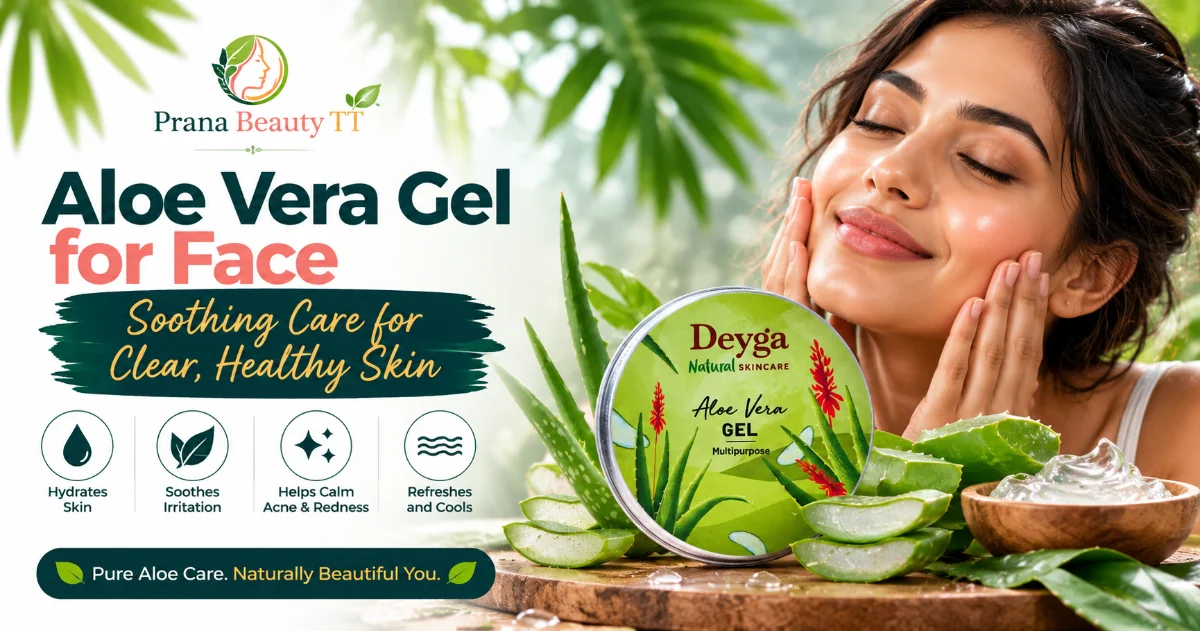
Most homes in Trinidad and Tobago have a pot of aloes in the yard. If you came back from Maracas with a burnt nose, someone probably cut a leaf and rubbed the gel on it. That’s still one of the best uses for aloe, and a bottled gel does the same job without the mess.
This guide covers what aloe vera gel does for your face, what it doesn’t do, and how to use it in a hot, humid climate.
What’s in Aloe Vera Gel?
The clear gel inside an aloe leaf is about 99% water. The rest includes polysaccharides such as acemannan, vitamins C and E, amino acids and a small amount of salicylic acid.
Aloe works mainly as a humectant, meaning it pulls water into the top layer of skin. It contains no oil, so it doesn’t sit on your face like a cream does. On a humid afternoon in Port of Spain, that difference is easy to feel.
Fresh leaf or bottled gel?
- Fresh aloes cost nothing, but the yellow sap under the leaf skin (aloin) can irritate your face. The gel also goes off within a few days.
- Bottled gel has a steady texture and lasts for months. Check that aloe leaf juice (Aloe barbadensis) is listed first, with no added fragrance, colour or drying alcohol.
Benefits of Aloe Vera Gel for Your Face
Relief after too much sun
Aloe won’t heal a sunburn faster. Cleveland Clinic dermatologist Dr. Lindsey Moore says it “can soothe irritated skin and make you feel more comfortable, but it won’t undo the effects of UV damage.” Studies comparing aloe with a placebo for sunburn haven’t found faster healing.
What you do get is a cooler, less tight face and less peeling, because the skin stays hydrated. After a beach day at Pigeon Point or a long day on the road at Carnival, apply a thick layer and don’t rub it in.
See a doctor instead if the burn blisters, swells badly, or comes with fever or signs of dehydration, or if the burnt skin belongs to a baby under one year old.
Light hydration for oily skin
People with oily skin often skip moisturiser, and their skin can end up producing more oil to make up for it. Aloe gel absorbs in under a minute and leaves no shine. For very oily skin it can be your only daytime moisturiser.
Less redness after shaving, threading and waxing
Aloe calms inflammation. It helps with razor bumps on the face and neck, redness after threading or waxing, and heat rash on the neck.
Support for acne-prone skin
A randomised, double-blind trial in the Journal of Dermatological Treatment (2014) found that aloe vera gel used with tretinoin cleared mild to moderate acne better than tretinoin alone. Lab research also shows acemannan works against the bacteria linked to acne.
Aloe works best as an add-on to your acne routine. On its own, it won’t clear moderate or severe breakouts. Our simple routine for clear skin covers the full plan.
Help with small cuts and burns
Aloe has a long record of use on minor burns and scrapes, backed by research on wound healing. Use it on a small kitchen burn or a picked pimple. Keep it off infected skin and deep wounds.
What Aloe Vera Gel Can’t Do?
- Protect you from the sun. It has no real SPF. You still need SPF 30 or higher every morning.
- Remove old scars or deep dark spots. For marks, use a targeted ingredient like vitamin C. Our guide on how to fade dark spots and uneven skin tone explains what works.
- Fix very dry, flaky skin alone. Dry skin needs a cream on top.
How to Use Aloe Vera Gel on Your Face?
Morning
- Wash with a gentle cleanser such as Oat Milk Face Wash.
- Mist or pat on Rose Water Toner if you use one.
- Apply 10% Vitamin C Face Serum if you’re treating dullness or marks. Read more in vitamin C for skin.
- Pat on a pea-sized to almond-sized amount of Aloe Vera Gel.
- Finish with sunscreen.
Night
- Wash off sweat and sunscreen.
- Apply aloe gel.
- If your skin is normal to dry, or you sit in air-conditioning all day, add Light Moisturising Face Cream on top.
Once or twice a day is enough.
Aloe Vera Gel by Skin Type
| Skin type | How to use it |
|---|---|
| Oily | Your daytime moisturiser, under sunscreen |
| Combination | All over by day; add cream to dry patches at night |
| Acne-prone | Morning and night, alongside your acne cleanser or treatment |
| Sensitive | Patch test first, then use as a calming layer |
| Dry | Under a richer cream, never on its own |
Side Effects and Patch Testing
Most people tolerate aloe well, but:
- Patch test a small amount behind your ear for 24 hours. Stop if you get itching, a rash or hives.
- People allergic to garlic, onion or tulips are more likely to react, since these plants are related to aloe.
- If you use the fresh leaf, stand the cut leaf upright for 10 minutes so the yellow sap drains before you scoop out the gel.
- Many “after-sun” aloe products contain fragrance, colour or alcohol, which can sting burnt skin. Read the label.
Frequently Asked Questions
How should I store aloe vera gel in Trinidad’s heat?
Keep it out of the sun and away from a hot car. The fridge works well, and the cold gel feels better on warm skin. Use it before the expiry date, and throw it out if the smell, colour or texture changes.
Can I mix aloe gel with lime, turmeric or other kitchen ingredients?
Skip lime. Lime juice on skin that then goes into the sun can cause dark, blistering patches known as phytophotodermatitis. Turmeric can stain the skin yellow. A plain gel is safer than home mixes.
Why does aloe gel ball up under my sunscreen or makeup?
You’re probably using too much, or applying the next layer before the gel has dried. Use a thinner layer and wait a minute before the next product.
Can I use aloe gel with retinol or exfoliating acids?
Yes, and it can reduce the dryness and stinging these products cause. Apply your treatment first, let it absorb, then put aloe on top.
Is aloe vera gel safe for children’s faces?
A fragrance-free gel is generally gentle for children, but do a patch test first. For babies under one year, ask your paediatrician before using it, especially on sunburn.
Final Word
Aloe vera gel suits Trinidad and Tobago’s climate. It hydrates oily and combination skin without grease, eases redness after shaving and sun, and helps an acne routine work better. Pair it with daily sunscreen, since aloe doesn’t protect you from UV.
Keep a bottle of Prana Aloe Vera Gel in the fridge and another in your beach bag.