
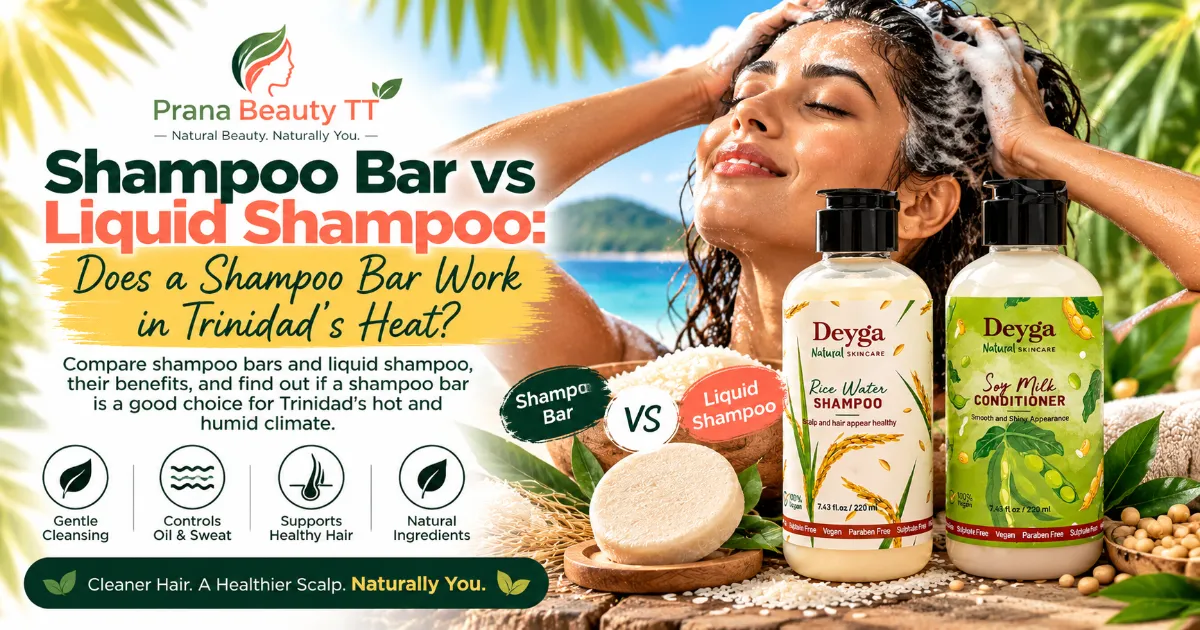
Quick answer: A shampoo bar is shampoo without the water: a solid, concentrated bar you rub into wet hair. It cleans as well as liquid shampoo, lasts longer, travels easily and avoids a plastic bottle. Not all bars are the same, though. Bars made from soap (saponified oils) are alkaline and can leave a waxy film, especially with hard water. Bars made with gentle synthetic cleansers (syndet bars) are closer to the hair’s natural pH. Check the label, follow with conditioner and keep the bar dry between uses, which matters a lot in Trinidad’s humid bathrooms.
Shampoo bars have become popular with people who want less plastic in their bathroom, and they’re handy for gym bags and beach trips. But many people try one, find their hair feels heavy or waxy, and give up within a week.
Usually the problem isn’t shampoo bars in general. It’s the type of bar, the way it’s used or the way it’s stored. This guide explains all three.
What Is a Shampoo Bar?
Liquid shampoo is mostly water, with cleansers, conditioning agents and preservatives mixed in. A shampoo bar is the concentrated, solid version, with little or no water. You wet it, rub it into your hair or hands, and it lathers like regular shampoo.
Shampoo Bar vs Liquid Shampoo
| Shampoo bar | Liquid shampoo | |
| Format | Solid, concentrated | Mostly water |
| Packaging | Usually paper or none | Usually plastic bottle |
| Travel | Spill-proof; no liquid limits on flights | Can leak; liquid limits apply |
| How long it lasts | Usually longer, if kept dry | Varies by bottle size |
| Ease of use | Takes a few washes to learn | Familiar |
| Spreading through thick or long hair | Takes more effort | Spreads easily |
| Best for | Travel, gym, less plastic, short to medium hair | Very long or very thick hair, medicated scalp treatments |
Neither is automatically better for your hair. What’s in the bar or bottle matters more than the format.
The Most Important Thing: Soap Bar or Syndet Bar?
This is the detail most shampoo bar articles leave out, and it explains most bad experiences.
Soap-based shampoo bars
Some bars are true soap, made by reacting oils with lye (a process called saponification). On the label you’ll see words like “saponified coconut oil”, “sodium cocoate”, “sodium olivate” or “sodium hydroxide”.
Soap is naturally alkaline. Cosmetic chemist Ramya Viswanathan explains that traditional soap bars have a pH of about 9 to 10.5, and that soap reacts with minerals in hard water to form a waxy film, the same “soap scum” you see on a shower wall.
Syndet (synthetic detergent) shampoo bars
Other bars use gentle synthetic cleansers, often made from coconut, such as sodium cocoyl isethionate (SCI). These can be formulated to a lower, hair-friendly pH, typically around 5 to 6.
Why pH matters for hair
A 2014 review in the International Journal of Trichology (Gavazzoni Dias et al.) found that shampoos with an alkaline pH can increase the negative electrical charge on the hair surface. This increases friction between hairs, which can damage the cuticle and lead to breakage and frizz. Lower-pH shampoos create less static and may reduce frizz.
In Trinidad’s humidity, where frizz is already a battle, this matters. If frizz is a problem for you, see our guide on whether your hair care routine is causing frizz.
How to tell which bar you have: read the ingredient list. If the first few ingredients are saponified oils or sodium salts of oils, it’s soap-based. If you see sodium cocoyl isethionate, sodium cocoyl glutamate or similar, it’s likely a syndet. If you’re not sure, ask the brand for the pH.
The “Transition Period”: Real or Not?
Many brands say your hair needs two to four weeks to “adjust” to a bar, because silicones from liquid shampoo are washing out.
There’s some truth to it. If you’ve used products with silicones, your hair may feel different for a few washes. But if your hair feels waxy, sticky or coated after every wash for weeks, that’s more likely soap residue reacting with hard water, or not rinsing enough. It’s a reason to rinse longer, use conditioner or switch to a syndet bar, not to wait it out indefinitely.
How to Use a Shampoo Bar
- Wet your hair thoroughly with lukewarm water.
- Make a lather. Rub the bar between wet hands, or glide it directly over your scalp a few times. For thick or curly hair, rubbing it in your hands first and then working the lather through sections is gentler.
- Massage your scalp with your fingertips. Focus on the scalp, where oil and sweat build up; the ends get cleaned as you rinse.
- Rinse well, longer than you would with liquid shampoo.
- Condition. The American Academy of Dermatology (AAD) recommends conditioner after washing; it helps smooth the cuticle and makes combing easier. The Soy Milk Conditioner pairs well with a bar.
- Detangle gently from the ends up with a wide-tooth or wooden comb.
The Coconut Milk Shampoo Bar is designed for regular use. If you prefer a liquid, our post on rice water shampoo covers that option.
How to Store a Shampoo Bar in a Humid Climate
Trinidad’s humidity is the biggest enemy of a shampoo bar. A bar that sits in water or steam turns soft and mushy and gets used up fast.
- Use a draining dish with slots or a raised rack, so water runs off.
- Keep it out of the direct shower spray.
- Let it dry fully between washes. Two bars used on alternate days last longer than one bar used daily.
- Cut it in half. Use one piece and keep the other dry and wrapped until needed.
- For travel, use a tin or bag with ventilation and let the bar dry before packing it.
Who Should Try a Shampoo Bar, and Who Might Prefer Liquid
Good fit:
- People who wash often after the gym, beach or work in the heat; see how often to wash your hair in Trinidad
- Short to medium hair
- Travellers and anyone who wants less plastic
May prefer liquid, or a syndet bar specifically:
- Very long, very thick or tightly curled hair, where spreading a bar takes time; our guide to caring for curly hair in Trinidad covers routines for curls
- Anyone using a medicated shampoo for a scalp condition
- People with very hard water who keep getting waxy buildup from soap-based bars
Frequently Asked Questions
Can I use a shampoo bar on colour-treated or relaxed hair?
Often, yes, but choose a gentle, pH-balanced bar, since alkaline products can lift the cuticle and affect colour. Ask your stylist if you’ve had a recent chemical treatment.
Can I use a shampoo bar on my body too?
You can, but it’s designed for hair, and using it all over your body will make it run out much faster. Most people keep it for hair and use a separate bath bar for the body.
Why does my bar feel slimy and get smaller quickly?
It’s staying wet. Bars dissolve in standing water and steam. A draining dish and letting it dry between uses usually fixes this.
Do shampoo bars expire?
Most last a long time if kept dry, but check the label for a “period after opening” or best-before date. If it smells off, changes colour or gets mouldy from sitting wet, replace it.
Is a shampoo bar good for dandruff?
A gentle bar can keep the scalp clean, but it won’t treat dandruff on its own. If you have dandruff, you may need a shampoo with a specific anti-dandruff ingredient. See what causes dandruff and how to get rid of it.
Final Word
A shampoo bar can be a convenient, low-waste swap that works well in Trinidad’s heat, as long as you know what kind of bar you’re using, rinse thoroughly, follow with conditioner and keep it dry between washes. Try the Coconut Milk Shampoo Bar with a draining dish, give it a few washes and adjust your routine based on how your hair feels.